

week 24 / 2026: showing and telling
Like science fiction literature, a well-executed work of experiential futuring can look prophetic in hindsight—but it’s what they get wrong that tells you the most in hindsight. Plus: when to show, and when to tell?

“I’m finding it hard to explain / why I think that I’m right again / I’d love someone else to blame / so I’m a coward because of you…”
Greetings from Malmö, where the weather can’t quite make up its mind, and the whole country is winding down hard ahead of midsommar, as is traditional.
This week we’re thinking about narrative artefacts for futures: why and how they work, and how to make them well.
Grab your crayons, kids, and let’s get to colouring.
between the pixels
If you read only one thing from the internet this week, it should be Scott Smith’s dozen-year look-back at a classic bit of narrative prototyping: Near Future Laboratory’s Winning Formula, a fictional football-focused newspaper supplement set in 2018 but made during 2013 and 2014.
I remember it well, not because of the topic—you would be extremely hard-pressed to find someone who cares less for football than I—but because of the ambition and the execution. I encountered it at Future Everything 2014 in Manchester, which I think may also have been the time I first met Team Changeist in person; they were also speaking at the conference, as I recall, and of course they’d been out dropping copies of Winning Formula in local downmarket eateries.
This was the first-flush hey-day of design fiction, at least in the UK. It was projects like this that got me really excited about the possibilities of the approach, which led to me making—or at least trying to make—such techniques a part of my doctoral research. That proved... difficult, for various circumstantial reasons, and it wouldn’t really be until I started working with the Climaginaries crew here in Sweden that I could really start putting those ideas into workable practice.
Part of the difficulty I had was that, academically speaking, there wasn’t a lot of theoretical or empirical grounding for this sort of work—at least, not the sort that would satisfy civil engineers or urbanists, who were my epistemological guardians at the time. What little they knew of futures and foresight was the predictive/extrapolative paradigm that goes all the way back to RAND: strictly rational, quantified assessments of viability. The idea that you might want to tell stories about prospective systems without necessarily aiming to depict a certain plausible outcome was… well, I won’t go so far as to say anathema, but it was a very hard sell.
That’s somewhat ironic, though—because such work, much like science fiction literature, can often look uncannily prescient with hindsight, as Scott notes of Winning Formula:
That hit rate looks uncanny until you remember what it actually measures. None of these were guesses; they were extrapolations along incentive gradients from signals already visible in 2013 — Prozone data, high-frequency trading, the quantified self, the first soylent-fed optimization culture. Mechanisms compound predictably, because money and information want specific things. What the retrospective accuracy validates is not foresight as clairvoyance but foresight as research: scan honestly, follow the incentives rather than the drama, and the mechanisms will tend to arrive even when the names, dates and flags attached to them don't.
However, there is something delightfully taoist about this business: you can’t set out to predict “the future”, and if you do set out with that intention, you will pollute the work with a whole bunch of unexamined biases. But, if you do a sufficiently rigorous job of looking at the present and working through the implications at ground level, you’ll often get a pretty good predictive hit-rate in the fullness of time. This to me is very much wei wu wei—or, to use Crowley’s line, “working without lust for result”.
But the misses are more instructive than the hits. From the vantage of 2013, biometric borders, drone surveillance and political boycotts of the World Cup seemed pretty plausible, but in the context of a tournament held in Russia, with the US playing the principled withdrawal card. As Scott puts it, they “got the machine right and the operator wrong”.
Perhaps the most valuable bit of this write-up for me, however, is Scott’s analysis of why experiential artefacts like this are so effective.
... journalistic furniture forces falsifiable specificity. A scenario deck can say "media rights will fragment and surveillance will intensify." A newspaper has to print the price of the feed, the name of the betting firm, the percentage of fans reconsidering travel, the quote from the players' union. Specificity is what makes the artifact auditable later — and auditability is where much of the long-term value lives. We did not know in 2013 that we were writing something that could be marked against reality. But because the form demanded detail, it can be, and the marking teaches you things no contemporaneous review could.
Point being: it’s not an accident: the prototype is not just a container for the work, it’s the set of creative constraints that forces you to really explore the world you’re trying to imagine.
(Nonetheless, it can be very hard to sell. Decision-makers see this sort of project and think “oh, cute; novelty sci-comms deliverable”, while they should be thinking “ah-hah, rigorous foresight method which does double work as a discursive lumpy mailer for getting attention and impact in a world saturated with research PDFs”. Seen as the former, narrative prototyping looks very expensive and time-consuming; seen as the latter, it should look like a bargain.)
The format is the engine of a prototype project, per Scott, but it doesn’t run entirely on autopilot: the work of worldbuilding happens at both the abstract and the concrete ends of the scale. Put another way: even when what you’re doing looks a lot like “making a fake newspaper”, you’re actually making a lot of very granular storytelling choices along the way, using techniques you’ve picked up (whether knowingly or not) from science fiction media.
Like most artistic techniques, these are learned through a process of imitation and refinement over time. There are rules of thumb that can be taught, certainly but the most crucial thing to teach is that they’re only rules of thumb, and prone to trip you up if treated as rigid techniques.
(This is why I say to my fiction students that there’s only really one true rule of writing, namely “you can do whatever you like, so long as it works”.)
Perhaps the best-known rule of thumb for writing is our old friend “show, don’t tell”, which (I would argue) is particularly important in genre literatures and in fiction-for-futures, because getting across the otherness of the world of the story is such an important part of the work. It’s also crucial for narrative designers in the world of gaming, which is why I’m once again going to quote the indispensable Alexis “Weather Factory” Kennedy, who sums up the balance of merits between the two modes with admirable succinctness:
... everything in the game is an opportunity to create an emotional or aesthetic response. If we ‘tell’ rather than ‘show’ then we are generally sacrificing an opportunity to create that response. On the other hand, if there is something that needs to be said clearly and we fail to say it clearly, that’s a bigger problem. The art is I think partly in knowing the difference, but mostly (again see my last answer) in being able to multiplex those two modes together effectively. It’s never purely either show or tell.
That said—and casting no shade on Kennedy whatsoever—even that paragraph is really just an unpacking of the rule of thumb; the unanswered (and perhaps unanswerable) question of when to show and when to tell remains, because it is a different question every time.
It’s a matter of judgement, which is a matter of experience, which is a matter of practice. To do it well, one must do it a lot.
between the pages
Rather unusually (and for reasons to be explained) I have not read anything from a dead-tree book this week, with the exception of some of my favourite passages from Elias Lönnrot’s justly celebrated translation of The Kalevala, the epic poem of the Finnish people.
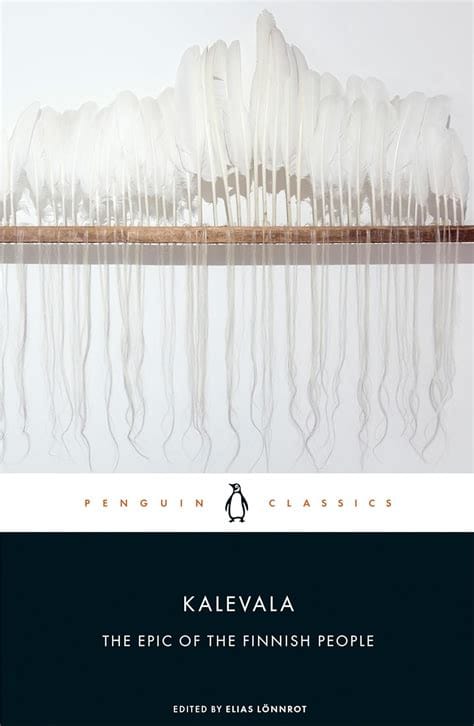
Apologies, bookworm buddies; I hope to be back on the beat next week!
lookback
The main reason I haven’t been reading any books this week is that most of the time I might have used for reading was spent instead on writing, and at a rather furious pace.
A couple of weeks back I was invited to do a collaborative performance with Malmö-based ambient music producer Eblo: he’d be playing live as part of a local showcase of electronic sound and light artists, and did I fancy maybe doing some spoken word stuff to go with it?
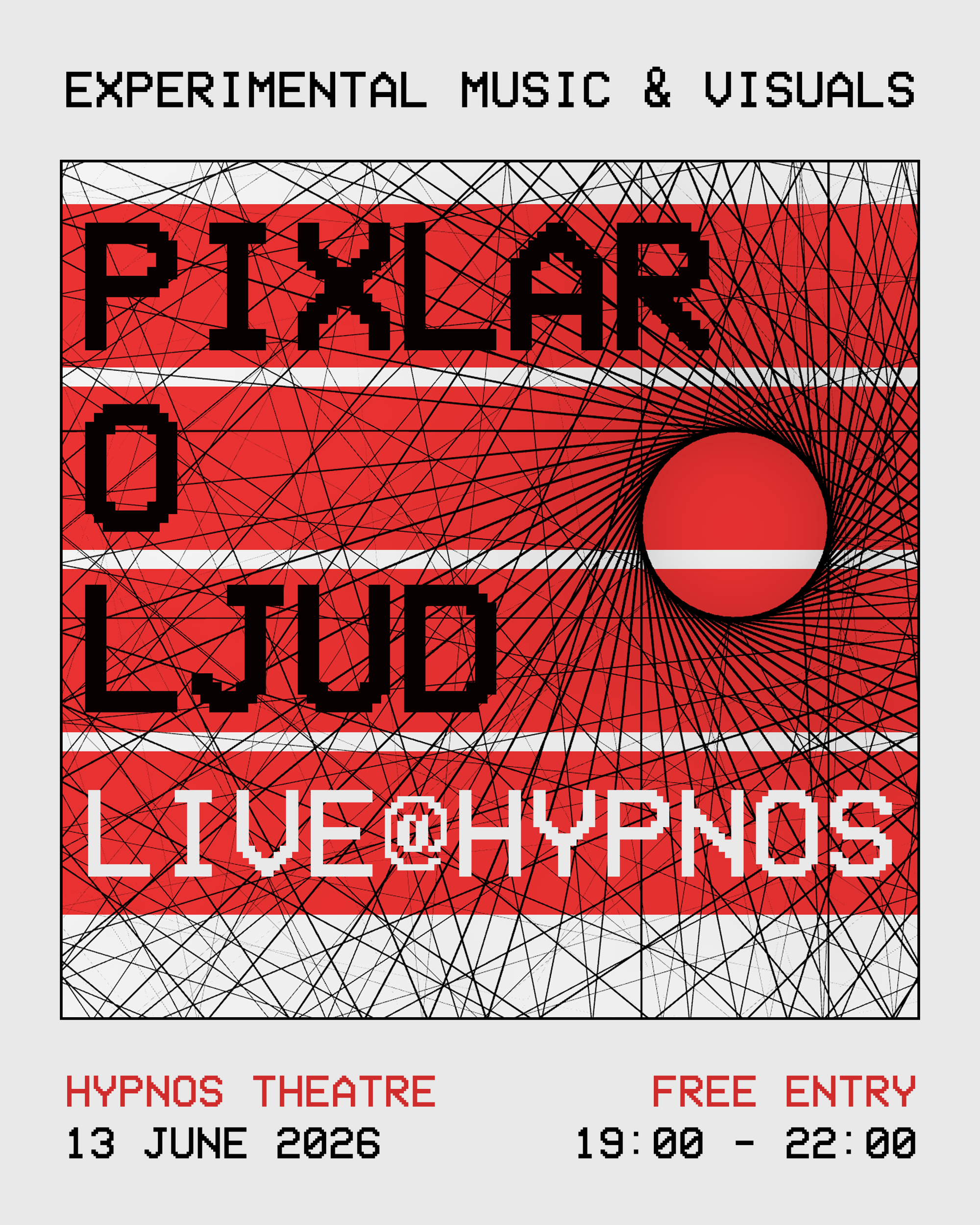
My attitude to my artistic activities is much the same as my attitude to my more conventional work: unless there’s a really good reason not to, you say “hell yes”, and worry about the details later—because while time is scarce, opportunities are scarcer still.
(Hence my somewhat unusual choice of reading this week: I wanted a different metric feel for one of the sections, and I’ve always wanted to do something that uses the trochaic chanting rhythm of the Kalevala, so I went back to get the beat settled in my mind.)
No regrets, to be clear: the gig was last night, and we made a pretty decent showing of ourselves, to judge by the response from the organisers and the audience. (Though the latter were clearly much more into the rather heavier techno material that came later in the evening!) But the timing was unfortunate, and I was lucky that a sudden and unexpected rejig of deadlines in MUNICIPAL freed up a bunch of time that would otherwise have been spent on client work; my writing felt hurried and of low quality, and that’s never a good thing, especially when you’re actually going to read it aloud to people.
However, it was perhaps not of as low a quality as I had thought—which is to say that there are two teachables here, the first being our old friend “saying yes is good, but try not to fuck up your schedule when you do so”, and the second being “work done in less-than-ideal circumstances has a tendency to feel terrible, but may not be as bad as you’d thought”.
Put another way: deadlines are painful, especially when they cluster, but they do drive results. Finding the balance between saying yes to things and being able to give sufficient attention and effort to the things you’ve said yes to is—much like the balance between showing and telling mentioned above—the sort of thing you can only learn by doing, falling short, and trying again.
More broadly, this happened at the end of a long chain of weeks where I’ve probably been pushing myself a little harder than I should have; I even remarked last week that I was making a habit of eating into my weekends. I didn’t quite brickwall this week, but I likely would have done if that unexpected slack hadn’t emerged from MUNICIPAL, and I definitely had a few moments where I felt I was falling way short of my expectations of myself, in terms of both my work and my professional demeanour.
For all the hundreds of books and courses and frameworks, time management is an art rather than a science, as individual to a person (and their circumstances and capacities) as their handwriting. I think I’ve gotten passing good at the day-to-day stuff, but the bigger-picture project management still trips me up sometimes, when my the hubris of my ambitions meets the nemesis of my abilities. Selah: we live and we learn.
ticked off
- Twelve hours of poetic writing. (See above)
- Eleven hours on PROJECT MUNICIPAL.
- Four hours of admyn, plus two hours of admyn specific to my Rogue Worldbuilding course, which starts next week. Where did the time go?!
- Three hours on these here weeknotes.
- Two hours of art practice (which is a rather pretentious way of tagging some time spent tidying bits and pieces around the studio because my brain was too fried to do anything more focussed, by hey—my ledger, my rules).
- Two hours of networking.
- And ten hours of undirected writing and reading, som vanligt.
OK, I’m going to put this week’s earnings into practice by taking the afternoon off and making stuff for fun. Your attention is appreciated, as always; I hope all is well with you, wherever you may be.
This has been the Worldbuilding Agency weeknotes for Week 24 of 2026. Thanks for reading! If you've enjoyed them, it's free to subscribe. If you are already subscribed, please send to a friend!



Comments ()