

week 45 / 2026: worlds and fans
Generative models have provoked an ugly culture of proof-of-work among online fandoms. But as ugly as it may be, it is in many ways justified—and more to the point, it’s not going away soon. I discuss with reference to Zoe Scaman, Johannes Gutenberg and Marshall McLuhan.

“I steal to feed / I fight to breathe / through hunger not greed / I find these days it’s the only way I can survive...”
Greetings from Malmö, where the days may be grey or bright or some mix of both, but the air is always a chilled knife that works its way between your layers, like a mugger who wants your warmth. This week we’re thinking about the impact of generative models on imagined worlds and the fandoms that love them.
OK then, here we go; we’re skipping between the pages this week, because we dropped a lot of words on among the pixels....
among the pixels
I want to start with a recent newsletter from friend-of-the-show Ahmet Alphan Sabancı, in which he expresses frustration with the current tendency for people to scour the work of creatives for evidence of the use of generative models.
When you’re doing a creative work, making art, tools and material you’re using is important — I’m not denying it. An artist can decide to use a certain tool or material for myriad of reasons, and it can say something about the art and the artist. But it should never be a reason to turn artists and writers into targets. When you turn a claim of using a tool into something that can be weaponized, it stops being a productive discussion of art. Because what you’re doing is simply limiting creativity, making experimentation something dangerous and needs to be avoided.
I agree that this is ugly stuff—the internet at its witch-hunty worst. However, at the same time, the ease with which we can identify this as contiguous with a much broader tendency of cultural purity policing online suggests strongly that this isn’t entirely about generative models. They are, I will argue, a very particular problem, and an accelerant of the underlying issue—but the underlying issue is context collapse, which we’ve been wrestling with for a couple of decades.
Indeed, I think my overarching thesis here is basically borrowed wholesale from Ada Palmer in that article I linked a few weeks back:
I think we’re wrong to separate generative AI and call it a completely new revolution. I often talk to Silicon Valley people who want to ask, are we so special that we’ve had six Gutenberg revolutions in a row, 10 years apart? And I say no, we're having one Gutenberg revolution: the computer.
The personal computer, the internet, the cell phone, social media, and generative AI are all iterations of the same one fundamental technological change, the same way Gutenberg’s press kept having new impacts for decades through news networks, pamphlets, and eventually the newspaper. A little too much of our analysis of Silicon Valley right now is of the past five years instead of the past 20.
One can certainly argue that the means shouldn’t matter to the ends of art, but the fact is we’re only having the debate because it has become very clear that, for a great number of people, the involvement of generative models in the creation of the art they engage with—even if that involvement is only suspected rather than proven—is poisonous to the pleasure they take in it. Perhaps it shouldn’t matter, but it very clearly does matter.
Which is why I was very glad to see a contribution from someone who was willing to do the legwork and ask out why it matters. That someone is the strategist Zoe Scaman, and is you read just one thing this week, let it be the transcript of the talk she gave to “IP management” people at MCM London Comic Con earlier this year.
The mark of a great researcher, regardless of sector, is the ability to marshal the facts and tell a good story; this is an exemplary demonstration. As I noted to Ahmet when I emailed him, and to the various other people I’ve forwarded this piece to, I found it both thrilling and depressing: thrilling because someone with both the resources and the platform actually put the time in to answer the real question; depressing because it somehow still beggars belief that the people who get made responsible for these beloved worlds can be so utterly clueless about why those worlds matter to the people who pay their salaries.
Scaman’s explanation hinges on the notion of the tithe: a contribution to a community that expresses your stake in such. When fans write fanfic or create cosplay outfits, the effort they put in is an expression of fealty to the world in which they are playing; it’s an expression of love, which is the unspoken cost of belonging to fan community.
Indeed, I think it’s this effort that makes a world a world: as soon as it is shared, a fabula begins immediately to exceed its original creator(s), and becomes a construct of collective interpretive consensus. You get a say in that collective by demonstrating your dedication to the world; your contribution may not be of great quality, but if you can show that you’ve put in the effort, you’re part of it nonetheless.
As Scaman explains, until recently you demonstrated effort simply by contributing material: written fiction, perhaps; drawings or paintings, whether analog or digital. But that system relied on the community’s ability to trust that the work was its own proof, so to speak. With the arrival of generative models, that trust has vanished: we can no longer be 100% sure that any text or image was produced entirely by the person who claims authorship of it. It has become possible to pay the tithe in false coin.
Understandably, Scaman focusses more on what this means for relations between fans and the IP businesses that rely upon them. Her advice is pretty simple, though not quite as blunt as my own paraphrase: if you slop the stuff that matters to your fans, they will find out, and they will fuck you up for it.
I’ve seen a lot of folk—particularly folk in the same echelons of the industry that Scaman was addressing—concluding that the backlash against generative-model content is a fad. I think they’re wrong; I think it’s a turn.
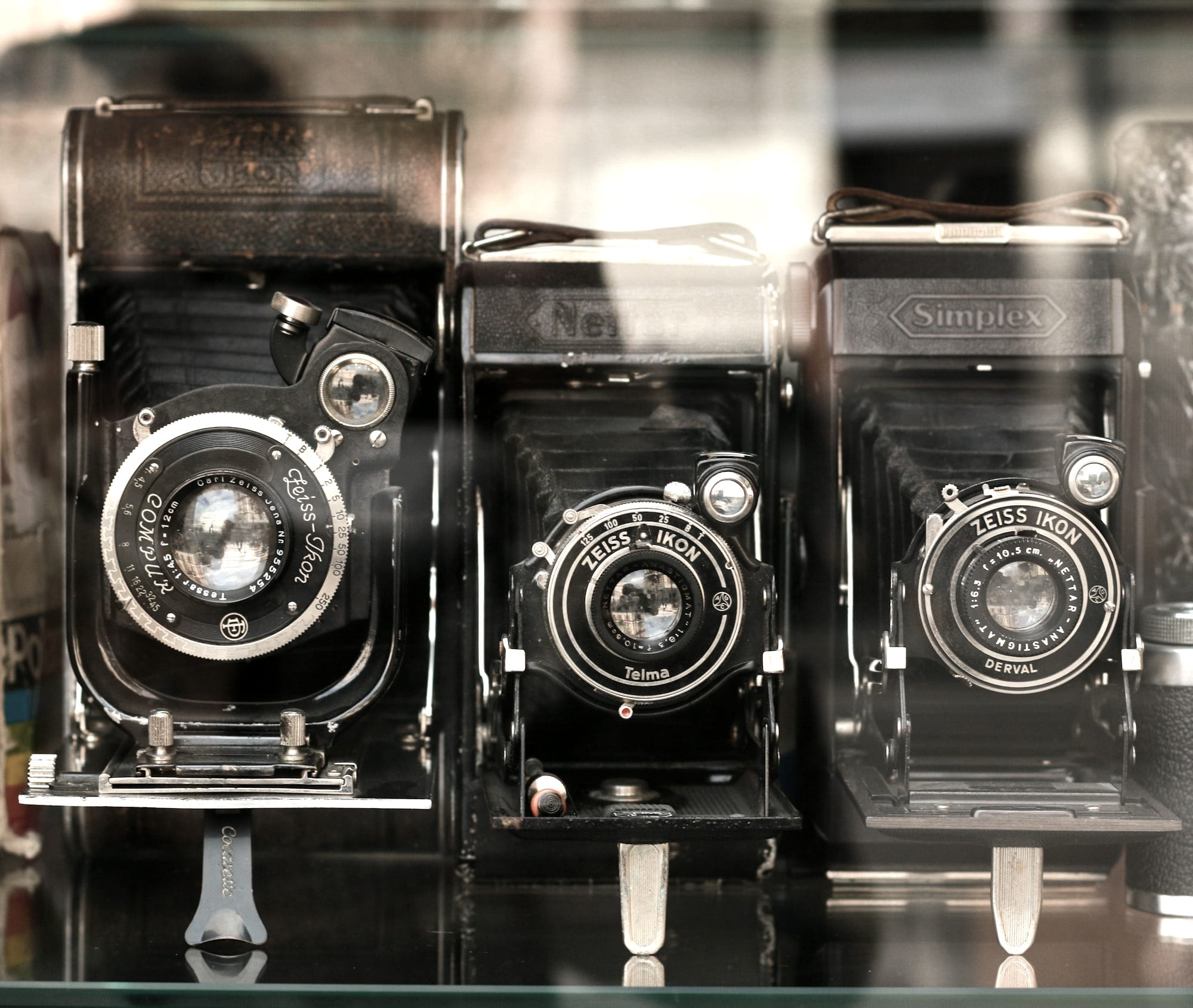
I think this is one of those generational or perhaps even epochal moments when a shift in media affordances obliges a society to come up with a new answer to the question of what makes art, art. It’s a decision, rather than a revelation—a collective decision about values, about what matters. The numbers Scaman has in that presentation are very hard to argue with, and the decision is clear: for it to be art, there has to have been real effort involved.
Not everyone is going to agree with that decision, but I suspect those who disagree will be a minority for the foreseeable future. You can argue the case for generative models as somehow equivalent to the word processor or the camera, but the very ubiquity of the things undermines your argument: everyone knows how easy it is to produce good-enough outputs, because that has been the thumping bass-line of the relentless, intrusive (and, frankly, low-effort) marketing of them.
If you’re shirking the tithe or paying it in false coin, then the fans are going to run you out of your own village. And this, I think, is some sort of justice. After all, IP businesses have always been very happy to make use of mob behaviours in fandoms when they were celebratory; this is just the flipside.
So, says Scaman, you should only use “AI” on the stuff no one cares about, such as the operational infrastructure of the business, or on aspects of the work where the result is deemed additive rather than subtractive.
That latter category is a little more troubling for me, personally, as it includes the use of machine translation to reach wider audiences; the recategorisation of translation as “non-creative” work is a tragedy that has already put a lot of people out of business, some of whom are good friends. There’s a discussion yet to be had about the recognition of categories of creative work, and the slippage thereof, but I don’t think the core argument is wiped out by the prospect of nuanced dynamics over the longer haul.
More broadly, though, Scaman’s advice seems blindingly obvious—but this is presumably because I am a creature from the creative side of the fence rather than the managerial. Perhaps this is the mark of the truly skilled strategist: the ability to very politely suggest to the emperor that he’s perhaps a little underdressed for the prevailing weather conditions, rather than to harangue the fool for his nudity.
So much for the B2C dynamic. It remains to be seen whether they’ll take Scaman’s advice, but given the prevailing precedent, I wouldn’t want to bet on it happening any time soon. What about the more grassroots dynamic that Ahmet was interested in, though—the thing where people are hectoring artists for proof-of-work?

To reiterate, this network purity culture in action, and as such not unique to the generative models problem. To return to Scaman’s analogy: it’s easier to make allowances and assume good faith when you all live in the same village, and have an awareness of one another’s circumstances and capacities. For better and for worse, digitally mediated social relations have stripped away that familiarity, and we appear to one another online simply as names and profiles with content to sell. Furthermore, we have become suspicious of that which we are offered, and not without good reason: the paradigm of enshittification means we’re all very accustomed to products and services and relationships being cheapened over time. That we treat our relations with artists—or with other people, full stop—in this transactional way is the tragedy of the age, but it’s easy enough to understand why we do it.
But there may even be an element of hope in here, if we look hard enough. Seen in a more positive light, what people are doing is questioning the means of production of that which they consume; perhaps there’s a new ethics of consumption emerging? That said ethics should be accompanied by shaming and intrusion is regrettable—but than again, what genuinely pervasive and enduring ethic didn’t get normalised by such dynamics?
(I also find myself wondering whether this isn’t to some extent an acceleration of a trend in the arts that was already well-established, namely a shift of emphasis along a spectrum from product to process… but that’s a question for another day, perhaps.)
I do pity the sudden ubiquity of proof-of-work as a burden on artists, particularly jobbing artists and fan artists, who are now obliged to tithe harder than before to distinguish themselves. But the blame for this situation lies with those—both corporate and individual—who have tried to skip the tithe or pay it in false coin.
There is a very valid argument that the mere existence of generative models has proven lethally corrosive to trust between human beings in all walks of life. It is particularly plain to see in the academy right now, where trust and tradition have been structural to the institutional form, and it may be particularly destructive there for that reason—but it’s everywhere now, and if you can’t see it, then at some level you simply don’t want to. To return to that Palmer quote from a few weeks back, this is the sense in which comparisons to the Gutenberg revolution are valid in this situation: new media challenge and change the ways in which we relate to one another, and to the world. But those changes are not simple, linear, or even dialectical; McLuhan, and particularly his tetrad model, is a helpful guide in this regard.
But I find that I do not pity those users of generative models who object most loudly to the proof-of-work phenomenon, and who argue most forcefully that the artistic ends should justify the means—because they are the disproof of their own case.
If it doesn’t matter whether a work of art was made by a generative model, then why do you not simply proudly label yours as such? Because you know, instinctively, that it does matter—and you know that you will be judged for it. You want to join the village, but you don’t want to pay the tithe.
Or, to put it in terms specific to my own sphere of creative work: you don’t want to write, but you desperately want to have written. The appeal of generative models for creative work is that they can sell you a feeling of the latter—but it is a false feeling, a false coin.

To return to the Gutenberg comparison, the real revolution wasn’t prompted by the printing of books so much as by the selling of indulgences. Creative work is fun, but it is work; it demands effort from all of us who do it. Those who think they can skip the effort shouldn’t be surprised that we think less of them for it.
lookback
This has been a recovery week, basically: I’ve spent some time at the desk, and I’ve been in the room for some GESTALT workshop action, but I’ve also done a fair amount of sitting quietly and sucking down honey-and-lemon, because frankly I wasn’t good for much else. I’m feeling much better today, though, and looking forward to getting back in the groove of the coming week.
ticked off
- Nine hours on PROJECT GESTALT.
- Five hours of admyn.
- Three hours of art practice.
- Three hours on these here weeknotes.
- Two hours of essaywork.
- Two hours of storywork.
- One initiatory hour on PROJECT LONGLINE.
- One hour of networking.
- And ten hours of undirected writing and reading, because some habits transcend such mortal trivia as illness.
OK, that’s your lot for this week. Thanks for your attention, and for your forbearance. I hope all is well with you, wherever you may be.
This has been the Worldbuilding Agency weeknotes for Week 45 of 2026. Thanks for reading! If you’ve enjoyed them, it’s free to subscribe. If you are already subscribed, please send to a friend!


Comments ()