

week 43 / 2026: chips and dips
The microprocessor supply chain is the apogee of economic globalisation—so you should plan for it failing, or being broken on purpose, fairly soon. Also: drawing a (fuzzy) line between the didactic telos of narrative prototyping and science fiction as literature, with Wells and Verne as exemplars.

“We’ll make it right / the world will still be here tomorrow / no need to cry / fear is something we can conquer…”
Greetings from Malmö, where the clocks fell back in the early hours of this morning, and the edge of whichever notable weather system everyone’s been talking about is translating itself into a whole lot of water falling from the sky at once. This week, we’re thinking about the consequences of a diet of “chips with everything”.
OK then, let’s do this thing.
among the pixels
As I spent some of this week finishing up an essay in response to the thematic proposal “technology with collapse as working assumption”, this New Yorker longread on the intricacies of the high-end microchip supply chain was as timely as it was informative. It’s great writing, for many reasons—but I think particularly for the way it doesn’t pedal the implications too hard, thus leaving you to think them through for yourselves.
Either than, or what I’m parsing as gentle indictment is in fact naive celebration:
The Apollo mission’s chips were less powerful than those currently inside a digital pregnancy test. We squander moon-landing capability to display a plus sign.
(I doubt I’m misreading it, though it does fall rather into the trap of seeing things mostly from a USian point of view. Which, given the publication is based in the US, is at least understandable.)
Meanwhile, if you want to take a proper look into the geopolitical abyss that the New Yorker piece only implies, this piece by Henry Farrell and friends at Foreign Affairs has got you covered:
The more some countries move to control key chokepoints, the more others will worry about how those chokepoints may be weaponized and seek to leverage their own. The result is a world bristling with chokepoints and defenses in which every power still feels completely insecure. Even the most ordinary kinds of mutual dependence can begin to look like existential security risks. Put another way, in a world in which everything is connected, nearly everything could be considered a chokepoint.
Regular readers will know that I’m not the sort of person who would defend economic globalisation on principle, if at all—but behind all the sabre-rattling is a reality that no one much wants to face: this is less a matter of war, and more a matter of a world in which access to high-end consumer electronics (along with a lot of other things that we’ve become accustomed to thinking of as commodities) is increasingly expensive and restricted.
Or, more plainly: you should start learning how to live without relying on computers now, before circumstances force your hand.
While we’re talking about our relationship to computers, this interview with science fiction authors Ada Palmer and Ken Liu has some good bits in it. I particularly enjoyed Palmer’s deployment of historical thinking to deflate hyped framings of “artificial intelligence”:
I think we’re wrong to separate generative AI and call it a completely new revolution. I often talk to Silicon Valley people who want to ask, are we so special that we’ve had six Gutenberg revolutions in a row, 10 years apart? And I say no, we're having one Gutenberg revolution: the computer.
The personal computer, the internet, the cell phone, social media, and generative AI are all iterations of the same one fundamental technological change, the same way Gutenberg’s press kept having new impacts for decades through news networks, pamphlets, and eventually the newspaper. A little too much of our analysis of Silicon Valley right now is of the past five years instead of the past 20.
She also sums up very neatly the utility of narrative methods with regard to exploring possible futures, namely as a sort of sandbox for red-teaming ideas which look admirable when considered outwith the messy complexity of actual social situations:
That’s one of the most valuable things about not just imagining a future but having a storyteller actually sit down and tell a story in it: You explore the premise in its messiness, working and not working, for the people it works for and the people it doesn’t. I hang out with a lot of people involved in fixing democracy, and they'll have a great idea, say sortition, choosing officials by lottery instead of voting, and sortition will work perfectly.
The reason they think so is that their sortition exists in a perfect abstract world, and they’re comparing it to American democracy, which has existed for 250 years, during which everyone has had an incentive to hack it. Of course perfect sortition looks better than imperfect voting. What a science fiction writer, or a historian, can do is show you sortition in action: working, being corrupted, working for these people and not those. Then you’re comparing the imaginary-and-flawed to the real-and-flawed, which puts them on par. That’s why science fiction is so good at helping us spot the weaknesses, the people left behind, and the "we could use this badly, guys" problems of innovations before we get to them. We don't just depict the world, we tell a story in it, with conflicts and failures.
Last but not least, a caution regarding the temptation to read science fiction as works of prophecy produced by seers. Sf scholar Anastasia Klimchynskaya uses the example of Jules Verne to deflate the predictive interpretation while also underscoring the value of what such authors are actually doing, namely exploring implications and possibilities:
Verne thus aptly illustrates the fact that science fiction authors don’t single-handedly come up with a new gadget, any more than solitary scientists like Victor Frankenstein single-handedly make world-changing breakthroughs all on their own. Invention and scientific innovation are rarely solitary acts in which a lonely genius is struck by inspiration; they are usually collaborative processes. Thus, Verne didn’t invent submarines, or even electrical submarines. But he did take something that was “in the air” (or the water?), being widely discussed by experts of the day, and wrote a lengthy story about its implications: Nemo is an anti-colonial rebel, a deposed Indian prince who uses the wealth that his submarine gives him access to fund an uprising in Crete. He also uses his submarine to sink ships and cut transatlantic telegraph lines, thus affecting the trade and communication that wealthy European imperial powers rely on. In other words, Nemo is a nation-state onto himself, and Verne’s brilliance lay in illustrating the implications of that kind of technological and military might.
I find myself increasingly trying to draw a line between science fiction as literature on the one hand, and the sort of narrative prototyping (or “fiction for futures”) work that I do on the other. One way to draw that line is teleologically: the red-teaming function is the main point of narrative prototyping (or at least one of the main points), and the entertainment value of the story/prototype/environment is secondary to (though supportive of) that. Meanwhile, science fiction as literature can perform that red-teaming function to varying degrees, at the author’s discretion, but I don’t want us to get to a point where it’s felt that it must.
It may seem a little counterintuitive, but I think that tendency to interpret speculative literature as didactic in a cautionary mode is not a counter to the tendency to read it as a catalogue of inventions to reify; rather, they are two sides of the same coin. A story that sets out with the intent to express that “X is bad” is little better than one that sets out to express that “X is good”--and neither of them are likely to be good art. Good art in this domain, as in all the others, is about letting the imagination go where it will: to conceive of all the implications, and to allow the reader the space to make their own decisions about the ethics.

Of course, no author can entirely keep their own ethical sense out of their fiction—and nor should we want them to! But I think there is a cautionary example in the form of Verne’s contemporary, H G Wells, for whom the temptation to the didactic and utopian was (or so I judge) rather stronger than the purely imaginative muse.
Granted, Wells is still read today, but almost always through a lens that assigns him the mantle of futurist avant la lettre; we read the fiction of Wells to see what one of the more influential minds of his era thought about the problems of the day. And as Klimchynskaya notes, Verne is still read this way, too—but Verne is also read for his own sake, because his novels are marvellous, propulsive stories in their own right, which we’d likely still read even if he’d been wrong about almost everything.
To read Wells is to read a lecture in disguise, however good the disguise may be—and it was sometimes very good, at least in the early days. But to read Verne is always to read a story, first and foremost—and I would hate for that magic to be crowded out by a didactic imperative.
between the pages
I haven’t really read anything much this week, with the exception of a few chapters at a time of Thomas Merton’s The Way of Chuang Tzu, a collection of interpretations of various writings of the noted Taoist sage. This has been less a matter of conscious choice than of incapacity, as discussed below.
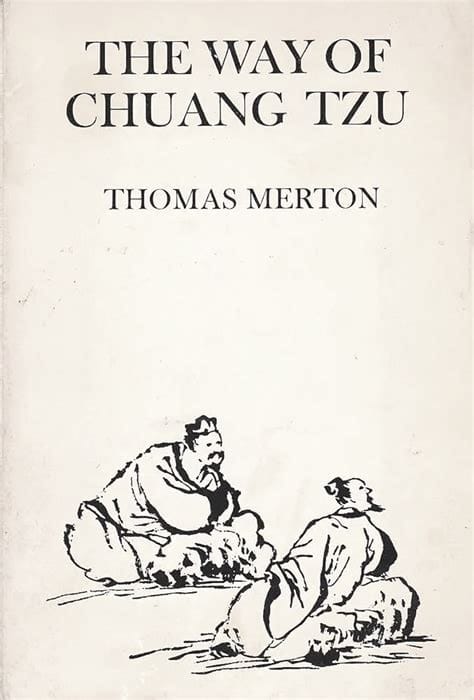
(It’s a lovely little book, though. That link will take you straight to a PDF of the 1965 edition; strongly recommended for anyone with even a passing interest in Taoism.)
lookback
This week has been kind of subpar, or at least that’s how it has felt. I think this can be ascribed to some sort of glancing encounter with whichever plague is currently winnowing its way through Malmö? Pretty much my entire book group was laid out by it at the start of the week, and while I haven’t been driven to my sickbed, I have felt generally meh, and while I’ve been working, I have definitely not been functioning at what I consider to be my full capacity.
Well, selah: it is the season for such things, after all. Meanwhile, PROJECT GESTALT—the latest Media Evolution foresight cycle, in other words—got off to a proper start on Friday; some familiar faces in the core group, but also some new people, and good vibes all round as always. It’s nice to have a job with a real in-person social dimension booked in for this time of year; reasons to leave the house and talk to people are very welcome in autumnal Malmö!
(Though it’s really not the sort of weather when you want to go by bike…)
ticked off
- Eight hours on PROJECT GESTALT.
- Eight hours on a story commission.
- Five hours of admyn.
- Four hours of essaywork.
- Four hours of art practice.
- Three hours on these here weeknotes.
- Two hours of prep for next week's tarot sessions.
- Plus ten hours of undirected writing and reading, as usual.
So, a fairly standard number of hours—but those hours were of substandard quality. Selah! We show up, and we do our best; we cannot ask much more of ourselves than that.
Very well, then: I should get on with my chores, and then settle down to write. Thanks for your attention, which is always appreciated! I hope all is well with you, wherever you may be.
This has been the Worldbuilding Agency weeknotes for Week 43 of 2026. Thanks for reading! If you've enjoyed them, it's free to subscribe. If you are already subscribed, please send to a friend!



Comments ()