

week 21 / 2026: empire and multitude
I’m pleased to announce a new publication: you can read a short story by yours truly in the just-released RISCS anthology! Meanwhile, feel free to hang around and discuss the shaky foundations of the USian technopoly, and the possible fates of the nation-state...

“This city drains me / maybe it’s the smell of gasoline / the millions pain me / it’s easier to talk to my PC...”
Greetings from Malmö, where—whisper it, cautiously!—it’s starting to feel a lot like early summer. This week I’m shamelessly sharing a newly published story, and giving the side-eye to an empire in free-fall…
Ready to rock? Let’s get to it!
among the pixels
Top of the pile this week is some shameless self-promotion.
WA regulars may recall me working on a piece of fiction back around the start of the year; that was my submission for a competition arranged by the Research Institute for Social Cybersecurity (RISCS), and I’m pleased to be able to say that “Dirty Weekend” was among the ten entries selected for publication. You can download the anthology as a free-to-air PDF from the RISCS website.
Here’s how my story starts:
“They all look the bloody same, these towns,” the constable declares, then turns it into a question. “Don’t they?”
Visibly bored, his favoured entertainments temporarily denied him, my official escort has spent most of the journey complaining about our destination. We’re on our way to a third-tier seaside resort on the East Yorkshire coast, where we’re supposed to bring a witness onto a protection programme. Every job like this reminds me of that line from Dazed & Confused: I get older, the police stay the same age.
Go read! And do please let me know what you think of it.
This clipping is actually from the week before last, but Baldur Bjarnason’s work is always worth your setting aside some time and really sitting with what he’s got to say.
Bjarnason starts from the millenarian mindset which haunts even the more atheistic corners of the Western world: a habit of thought that projects radical and seemingly revelatory paradigm shifts over the rather more gradual and chaotic processes of change that actually characterise human societies and thinking.
Far from being restricted to matters spiritual, this way of thinking is also deeply embedded in the academic tradition—and all the more strongly on the STEM side of the two-cultures split, precisely because folk shaped by those disciplines believe themselves immune to irrationalism, which is in turn the paradoxical cause of their tendency to talk in terms of revelation and revolution. But, notes Bjarnason:
From an individual perspective, switching your worldview or mental model on a problem or topic can feel revelatory. “This changes everything!” But the world hasn’t changed. All that changed is how you understand it.
I say all this because I don’t want people to fall into the pitfall of expecting revolution. But I do want you to be open to the idea that events can change, transform even, our understanding of how things work.
Bjarnason goes on to talk about Neil Postman’s notion of technopoly, which he applies to the global tech industry, noting that its hegemony has historically been backed by the tacitly imperial clout of the United States. But no longer:
If you have two economies of equal size and productivity, one has a massive financial sector and billionaires while the other does not, the financialised economy will have less left over to invest in research, education, infrastructure, and healthcare. Over time, it will inevitably fall behind the country with a smaller financial sector because it’s the other things that drive the economy and productivity, not stock market growth.
The US has coasted on the fact that it’s economy is so big that it could afford all the finance and billionaire parasites sucking its blood. At least for a while.
What happens to the products and the purpose of an increasingly unpopular and aggressive industry propped up by an economic and political base that is busily squandering its own diminishing power, both hard and soft?
We are, as Bjarnason suggests, soon to find out; the latest findings from Pew regarding sentiment around “AI” in the US do not bode well for the silicon evangelists.
By way of a parting shot, it’s worth remembering that if “technology” is to be a useful term, then it must include human techniques for doing things that do not necessarily involve electronics. Seen from this perspective, the nation-state is a technology—and on the basis of the excerpted introduction, that seems to be how Rana Dasputa’s new book thinks about this surprisingly recent but seemingly inescapable system of social and economic organisation: as a technology long past being fit for purpose.
The nation-state is a constantly changing commercial engine, whose interests coincide only sometimes with those of human beings. As a result of the transformations which are the focus of this book, that engine has departed very far from the euphoric expectations of the previous era. This does not mean states themselves will collapse: as our history will reveal, despotic nation-states have often enjoyed great success. It does mean they may cease to be dependable as platforms for thriving human societies. That presentiment lies behind the many present expressions of apocalypse. Our nation-state system has lost its Byronic pathos: in a remarkably brief period, its demented extraction from the earth, and from human minds and bodies, has caused the sensation of progress to be replaced with the anxiety of futurelessness.
I have long argued that what Dasgupta is calling “the anxiety of futurelessness” is a function of our being trapped in a paleofuture: a historical vision of futurity that is increasingly mismatched to the present from which we’re meant to march into it.
This is exactly a technological problem—but in order to get through it, we have to expand our idea of what “technology” actually is.
between the pages
This has been a rather slow week for reading, so I have little to report here, other than that I’m still working my way through Ada Palmer’s Inventing the Renaissance, despite the aforementioned stylistic gripes.
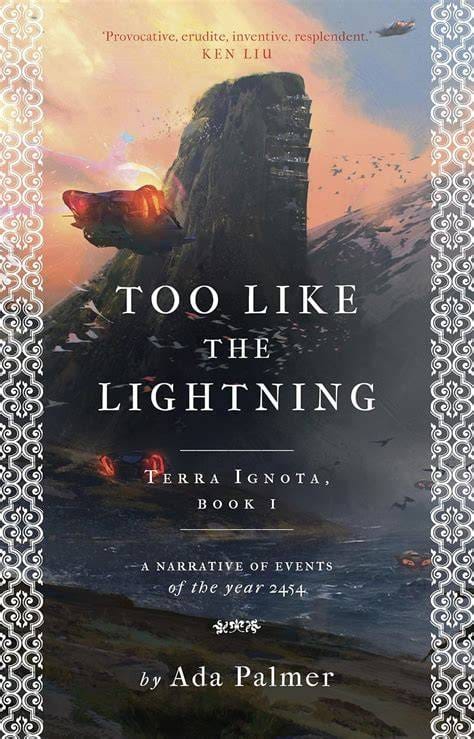
I should probably note here that I said a few years ago, in an email to a fellow critic, that “I found Too Like the Lightning [the first of Palmer’s four-book Terra Ignota sequence of novels] so infuriating that I immediately bought and read the following three volumes in rapid succession”. Point being: something about the way Palmer writes clearly rubs me the wrong way, but I obviously find what she writes about to be incredibly compelling nonetheless.
(Perhaps this is just the sort of stylistic gripe that only another writer could have? I’m pretty sure it’s not the internalised misogyny that one helpful correspondent suggested by email last week—thanks for that!—though I’m willing to entertain the possibility that it’s plain old professional envy.)
lookback
I spent a lot of this week away from the studio. Monday and Tuesday saw me uptown at Media Evolution, listening in and co-facilitating the opening stages of the latest collaborative foresight cycle on the future of games and gaming. It’s always a pleasure to play co-pilot to the inestimable Reeta Hafner—if you want to learn, then you should learn from the best and the bravest—and there’s a suite of scenarios taking shape in which I’m really looking forward to setting some stories.
Talking of learning from the masters, I went up-country on Thursday tospy onobserve the one and only John Willshire in action, while he ran a workshop at Wanås sculpture park. This was a proper road-trip, as a bunch of us travelled up there from Malmö on a hired coach—a journey much enlivened by John getting everyone to take the tour-guide mic and tell stories of varying degrees of historical accuracy about the Scanian landscape as we passed through it. Great fun—and very nice to get out of the city and see the countryside surging into seasonal plenitude.
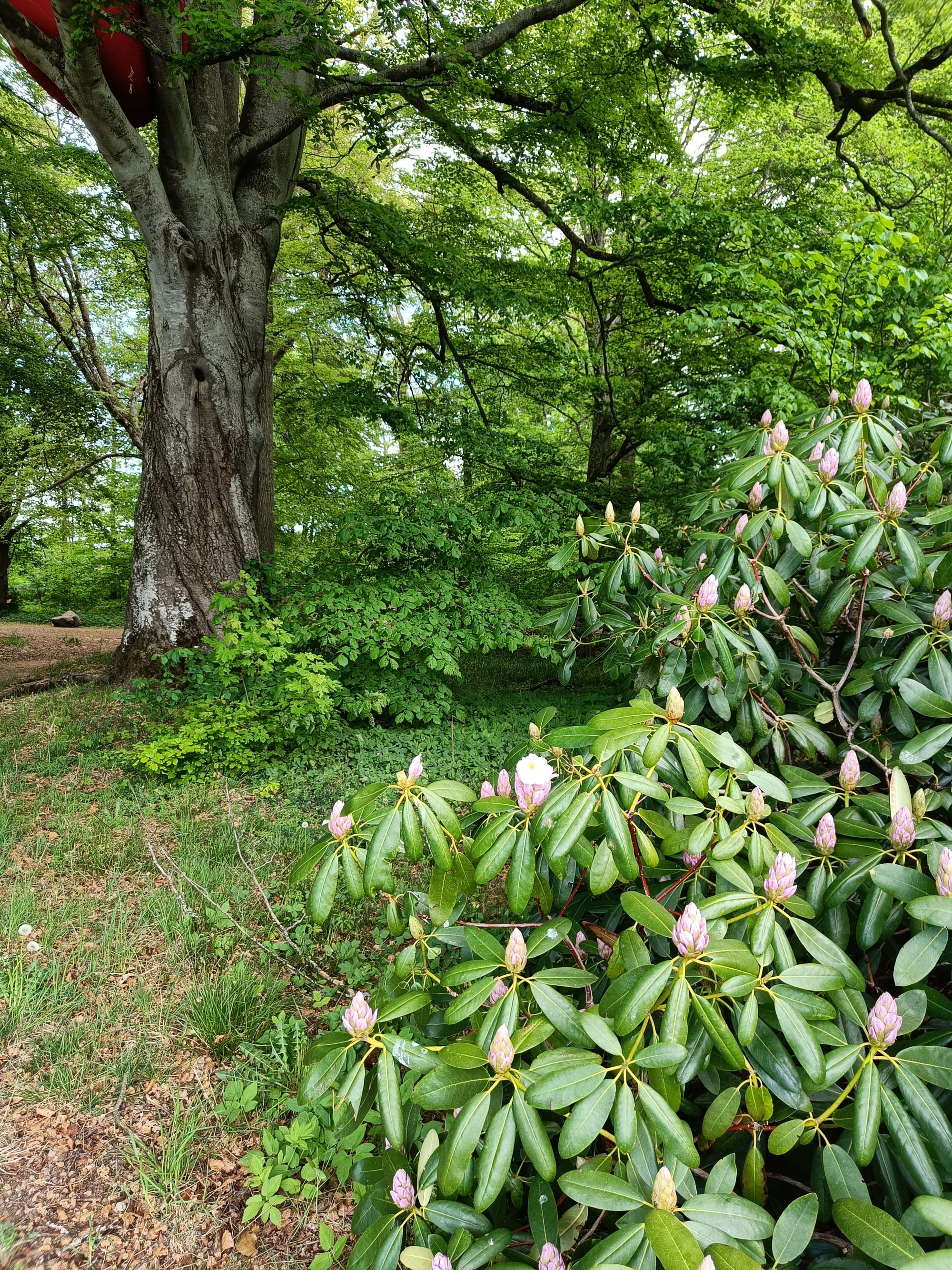
All that gallivanting does mean that I’ve got deadlines to catch up on, though—so this afternoon I’ll be foregoing my artistic entertainments and forging on with client work, in order to get ahead of the week to come.
ticked off
- Fifteen hours on PROJECT LUDIC. (This is the collaborative foresight cycle mentioned above, of course.)
- Nine hours of networking. (This includes the Thursday road-trip, as I’m not sure how else to categorise it.)
- Seven hours on PROJECT MUNICIPAL.
- Four hours of admyn, and two of bizdev.
- Three hours on these here weeknotes.
- Two hours of art practice. (Last Sunday afternoon, carried over onto this week’s ledger.)
- One hour on PROJECT BAVARIA, which is now officially greenlit.
- Plus ten hours of undirected writing and reading, as always.
A slightly shorter weeknotes this week, though I’m not expecting a blizzard of complaints in that regard! Your attention is greatly appreciated, as always, and I hope all is well with you, wherever you may be.
This has been the Worldbuilding Agency weeknotes for Week 21 of 2026. Thanks for reading! If you've enjoyed them, it's free to subscribe. If you are already subscribed, please send to a friend!


Comments ()