

week 20 / 2026: regimes and revolutions
If “AI” is a revolution, as its ideologues would have us believe, then they might want to consider how unpopular revolutions tend to end. Are they sincere in their beliefs? I argue that it doesn’t really matter, but that we should nonetheless treat them as if they are.
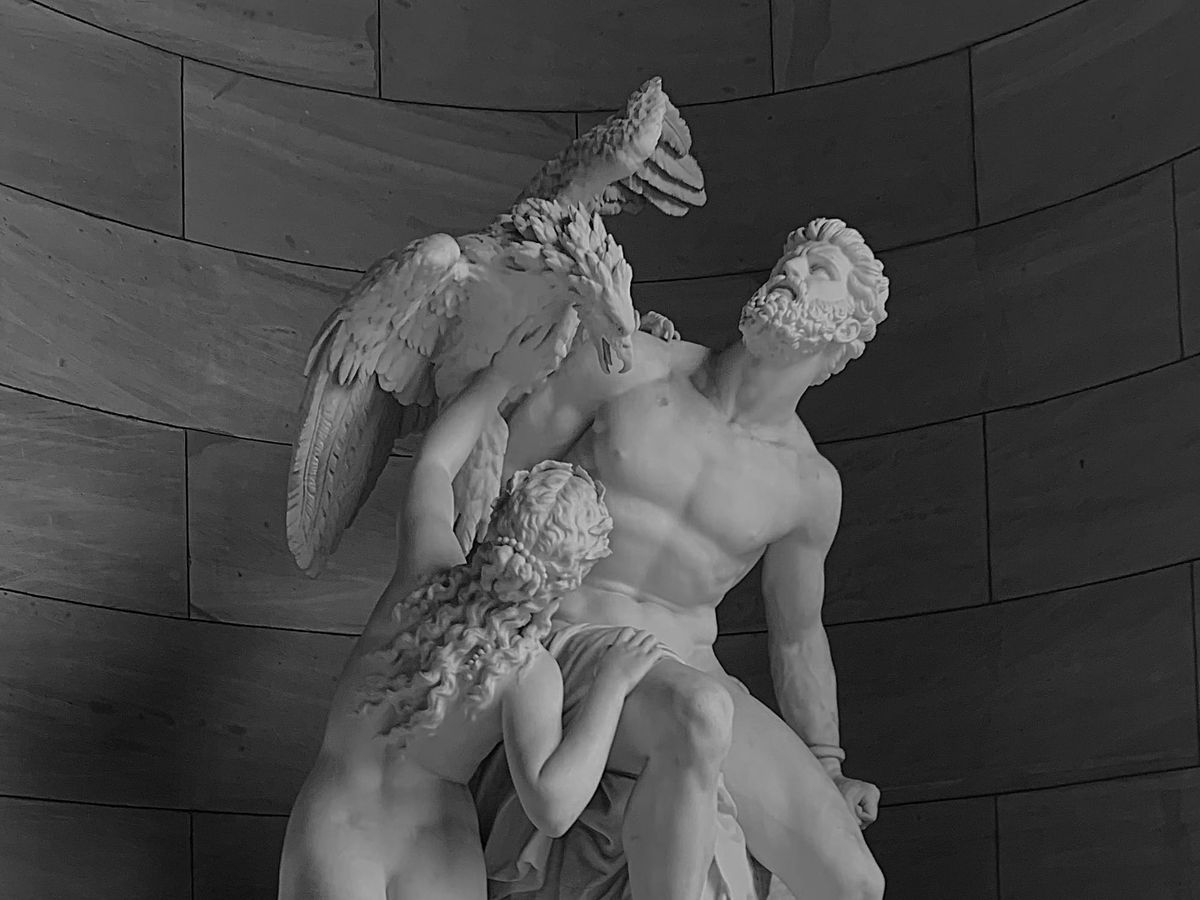
“When it all breaks down and we’re runaways / standing in the wake of our pain / and we stare straight into nothing / but we call it all the same…”
 erik welsh
Greetings from Malmö, where there are weeks when it feels like the sap of time wants to harden to amber, but it flows on all the same. This week, we’re thinking about the social side of the supposed “AI” revolution, which is not doing so well on the hearts-and-minds side of things...
Stack up your tokens, place your bets and spin the wheel…
between the pixels
It feels to me like the tone of the discourse has shifted fairly decisively with regard to Those Two Letters, though I should concede that may be a result of my increasingly relentless construction of filters designed to exclude anything with the slightest whiff of evangelism. Am I reading that which confirms my biases? Almost certainly! But it’s less a matter of choosing one’s side than having it made very clear which end of the stick one finds oneself at—and unless your paycheque is coming from the world of tech, then you’re at the pointy end.
(In truth, I think a lot of people in tech are also at the pointy end, but have yet to realise it.)
Indeed, I’ve been amused for some time at the way that the boosters so often seem surprised that we’re not all queueing up to be revolutionised, and it seems that others are coming to a similar realisation. The cheery threat of total human redundancy is part of it, but the commitment to acceleration as an end in itself is also deeply alienating to people who already feel like they’re being left behind:
... lately, I believe, it’s the accelerated nature of the AI boom that’s driving people everywhere mad. Both the conversation around the technology and its implementation are governed by an exponential logic. Intelligence, revenues, capabilities—all of it is supposed to hockey stick, say the boosters. New, supposed breakthroughs are touted but then immediately couched with the reminder that this is the worst the technology will ever be. Because AI systems have bled into every domain of our culture and economy, it's exceedingly difficult to evaluate the effect of the technology outside of a case by case basis. That you can’t begin to wrap your mind around the AI boom or orient yourself in it is a feature, not a bug, for those building the technology. But for anyone just trying to adapt, it’s difficult not to feel resentful or alienated. Silicon Valley is trying to speedrun the singularity, and it’s polarizing the rest of us in the process.
For clarity, I’m much less interested in or concerned with the technical side of this stuff than with the sociological (and political-economic) side. It’s all very well to dismiss LLMs as “just another media revolution”—though I’d argue that to do so is to mistake the launch of Concorde for the invention of heavier-than-air flight.
(Concorde is actually a great illustration of how the success of technological apogees is far from guaranteed: surprisingly often, there’s no good business case for Bigger Better Faster More once the hype recedes and the subsidies dry up. That the sitting POTUS wants to bring it back tells you a great deal about the difference between futurity and The Future; the latter is always a retreat dressed up as an advance, the zombie ideas of the 1900s still shambling through the ruins.)
The “AI” moment is not the start of a new revolution, so much as the end-game of the last one: a crystallisation of the underlying logic of computation as a general-purpose technology. It’s a naked lunch moment, per Bill Burroughs: suddenly everyone can see what’s on the tines of their fork. And it looks like this:
The more this became my new normal, the more I adjusted to the creaking lurch and giddy whiplash of the job. While we lounged in unpaid stasis waiting for an email to herald the arrival of work, we would be urged on by our team leaders and their exclamation points. Here they are at 3 am Eastern time with an update on why our Slack access has been revoked and why we need to change our password for the 17th time! There they are again at 11 pm with another energetic exhortation that the project will start any day now! At 7 am they’re back with the news that The Client is just finishing up Phase 1! At 2:27 pm: If you were a pizza, what kind of pizza would you be? Cue smiley face emoji. Fist emoji. Pizza emoji.
This would continue indefinitely. All unpaid.
The gig-work Fowler describes here might be dismissed as extreme, an aberration—and perhaps it is, I don’t know. But what I know from my own attempts to secure paying work off the back of my skills as a writer and researcher is that the difference is primarily one of degree rather than of type—and people I know in other lines of work tell similar stories.
Again, I suspect that people would probably swallow the ends if the means weren’t so ludicrous and insulting. Like the incursion of computing into All The Things, the passive-aggressive infantilisation of the employer-employee relationship is not new, but the intensity—and, as a result, the hypocrisy—has become unbearable. For all their talk about the thrusting vigour of untrammelled capital, the current masters of the world seem to have forgotten that the educated bourgeoisie have always been its bulwark; they’re losing the support of the people that they need the most, and revolutions tend to end badly for their instigators when that happens.
For an assortment of reasons, I try hard to default to the position of taking people at their word, though ideological extremes—of which Silicon Valley accelerationism is a textbook case—can test that commitment pretty hard. Without access to their inner thoughts, it’s impossible to tell whether your Thiels and Musks and Zucks really believe in the silicon godhead they claim to be building, or whether that’s just a story to drape over a desire the underlying imperative of Number Go Up, as Heather Parry notes:
One of the most terrifying realisations of my adult life has been that the tech industry, now maniacally-centred on producing this fabled AGI—which it cannot define, and for which it has no practical roadmap, beyond the borderline religious idea that it will just occur when their current models are pushed to some mythically large scale—is willing to expend seismic amounts of money, climate-shattering amounts of energy, and indeed almost all the planet’s resources on their vague and contestable methodology, with no obvious end in sight. Or, perhaps more realistically, that they are maniacally-centred on convincing us that they believe in AGI, because they want to amass seismic amounts of money. And we, the little people, probably cannot stop them.
I tend to believe that both of those options are true at the same time: that high-level success in business (or politics, if that’s still a useful distinction at this point) is a sort of Skinner box that trains the subject to do whatever makes that line on the graph go upward and to the right, but that the conscious mind rationalises then that by way of appeal to ideas and stories informed by the social context in which the subject is immersed. In other words, they believe in AGI with the same degree of commitment and sincerity that I bring to any of my own beliefs, which are likewise driven by unconscious motivations inculcated by the events and circumstances of my life to date.
Parry compares the AGI people to cult leaders, and I think that’s a fair comparison, but it comes with an implication that’s deeply uncomfortable: cult leaders, too, really believe in their ideas. Indeed, that’s probably what makes them so effective; it’s the belief that people respond to, rather than the beliefs, if you see what I mean.
This is uncomfortable, as I say, but that discomfort is the price of exiting the fingerpoint-y polarisation of the present. The last few decades have been defined by mutual accusations of insincerity from every point on the political spectrum, with the result that the discourse is almost entirely about where you stand, but not what you stand for. As discussed a few weeks ago, part of the appeal of the reactionary right is its willingness to actually take a moral position, instead of triangulating desperately around a dwindling core of voters at the middle of the bell-curve.
For the avoidance of doubt—and in case it was not already obvious—I do not agree with that moral position. But it seems painfully obvious to me that denouncing it without offering an equally clear and sincere counter-position is futile.
It’s a contest of visions, of stories—and “not like that” (or, worse still, “like that, but maybe a bit less so?”) isn’t a story that can win.
between the pages
I’m about halfway through Ada Palmer’s Inventing the Renaissance now, and as I feared, the bloggy style is becoming quite wearing. I very much hope it is serving to make the knowledge and wisdom that the book contains engaging and accessible for a larger audience than it might otherwise have reached—but it is, as we used to say back I the Nineties, doing my head in.
I’m still minded to finish it, but there’s a definite sense of sunk-cost sneaking into my calculations at this point, and life is too short for books you’re not enjoying. We’ll see how it goes.
lookback
This week’s first big set-piece was a trip to SLU Alnarp for a student-led conference/workshop day about agroecology. That’s not a topic I know much about, but that was the point of going, having been tipped off to it by friend (and SLU alumnus) Michael Löbmann of the Nordic Agroecology Research Centre—and the disciplinary name gives a pretty clear steer: it’s about putting an ecological perspective at the heart of agriculture.
The material was not ideally pitched for a complete outsider, but I wanted to get a sense of it as a scene as much as anything else. In line with my writing above, the technical aspects of reconfiguring the food system are important (and the mechanics of the regulatory landscape are perhaps the biggest obstacle) but so are the stories that are told about that reconfigured system. At present, these are still very much scene stories: small, energetic groups working out what they stand for and what they want to do. The challenge will be translating those stories into visions that are meaningful for the majority of people for whom food is just the stuff on the shelves at the local supermarket.
The other big feature was an afternoon of facilitation on PROJECT MUNICIPAL, which went well, but was as exhausting as ever. Online workshops are a blessing in many ways—not least because it’s so much easier to convene them in this over-busy world—but it never ceases to amaze me how much more they take out of me compared to an in-person session of twice the duration. Is it just me?
Perhaps the unusually intense sociality of the week explains why I spent a lot of time on my art. I’d love to claim this was wildly successful, and that I produced great aesthetic wonders, but in truth half of it was spent sorting out my studio, and the other half doing the painful but necessary work of sucking at new techniques (in this case, monoprint resist image transfers) in order to get better at them. However, it was at least successful in providing me some mental escape from my other work—and that’s the main point, really.
(If you’re wondering why I seem to spend so much time sorting out my studio: I’d been squirrelling away collage materials for a long time before actually, y’know, doing any substantial amount of collage work. As a result, I have storage bins full of various books and papers that I’m slowly sorting by type… and like all major organisational efforts, the process of moving from chaos to order necessarily involves moving through an interim stage of even greater chaos. But hey, it keeps me out of trouble.)
ticked off
- Nine hours of art practice.
- Nine hours on PROJECT MUNICIPAL.
- Seven hours of networking.
- Four hours on PROJECT CHAPERONE. (It looks like my work on this project is pretty much done at this point, though there may still be some little bits and bobs to sort out.)
- Four hours of admyn.
- Three hours of blogging and promotional writing.
- Three hours on these here weeknotes.
- Two hours of reading for research.
- Plus ten hours of undirected writing and reading, as always.
Next week is going to involve even more facilitation and away-from-desk time than this one, and there are also various writing deadlines starting to gather like thunderheads on the horizon, so I need to do some proper planning with my Sunday, I think.
Your attention is appreciated, as always; I hope all is well with you, wherever you may be.
This has been the Worldbuilding Agency weeknotes for Week 20 of 2026. Thanks for reading! If you've enjoyed them, it's free to subscribe. If you are already subscribed, please send to a friend!



Comments ()