

horse piss and dirty honey: on the more-than-human in (and beyond) Haraway’s Staying With the Trouble
In this inaugural Deep Read essay, I pull a few strong threads from Haraway’s masterpiece string figure of a book, and attempt to rescue the concept “more than human” from its ongoing reduction to greenwash nonsense.
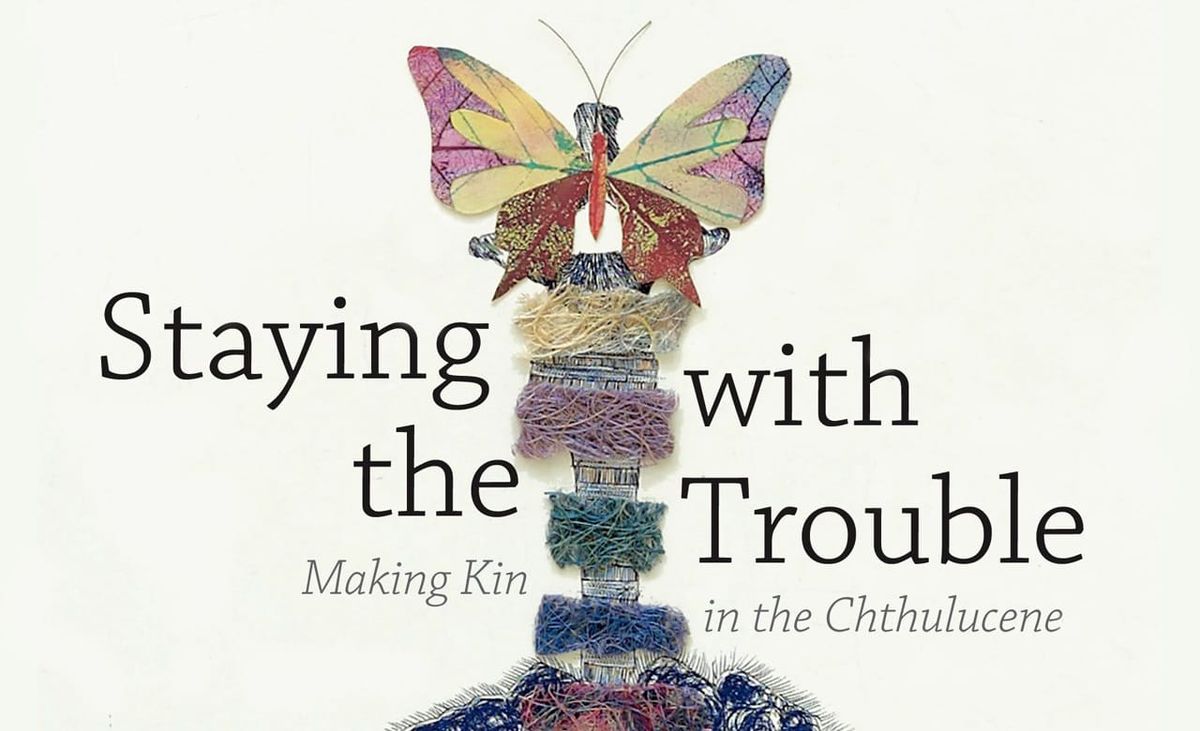
If you tried to trace the origin of the phrase “more than human” in relation to questions of philosophy and futurity, then Donna Haraway’s Staying With the Trouble is one of the books where your quest might plausibly end.
That’s not to say Haraway originated either the phrase or the idea, to be clear. Nonetheless, Staying With the Trouble (SWtT hereafter) has had a clear and visible impact not just in academia but beyond, as can be measured by the spread of both the titular phrase and the aesthetic style of the writing it contains, if not necessarily the rhetorical kick. That stylistic seepage is most easily spotted in the arts world, as well as its sister domain of design, in both of which spaces a tone and lexicon that we might describe as Harawayesque has, over the last decade or so, supplanted the bandying-about of terms from so-called French theory in gallery explainers and artist’s statements everywhere.
It is most plausibly from the design sphere that the more-than-human made the leap to the world of foresight and futures, along with various concepts attached. This is something of a blessing, but also something of a curse: I would argue that, as people interested in change for the better, we want important ideas to diffuse through various domains of endeavour; but there is a tendency for them to become simplified or even corrupted in the process of translation. Indeed, it is the widespread oversimplification of the more-than-human concept which in no small part motivates my writing this essay.
In recent years, I’ve seen gestures toward more-than-human approaches (MTH hereafter), both with and without direct reference to Haraway’s book, in almost every discipline of research and field of activity. As a writer, I am acutely aware of the futility of policing the shifts of meaning that accompany the adoption and spread of names for complex ideas—which means I’m probably obliged at this point to simply accept that MTH has suffered much the same fate as the adjective “sustainable”, though perhaps less visibly and with rather less drama involved in the process. While more rigorous uses are still to be found, particularly in academia (where the rigour may well be accompanied by the impenetrability of insider discourses), MTH “in the wild” seems now to be mostly a synonym for the introduction of plants and animals into a space, often but not necessarily urban, where they might not be expected to be found; think, for example, of a property development prospectus that features a beehive on an apartment-block balcony.

Along with other flat-ontological frameworks, MTH also appears currently to be playing a small role in spurious justifications for various technological nonsenses, such as the insertion of cryptocurrency mechanisms into situations where even regular fiat money has no business being, or arguments in favour of the personhood of robotic systems or large language models. The cryptocurrency thing can be most easily shown to be in complete contradiction to the original intent of MTH theorists, and Haraway in particular, and we will come to her rejection of solutionism below; the personhood of networked electronic assemblages, meanwhile, I deem both too ridiculous and too involved an argument to rehearse in the current context.
As to the beehives, which are my deliberately facetious figure for the most common failure-state of the phrase, I hope it’s clear that I am not suggesting that “what if [X], but with more bees?” is necessarily a bad idea. To the contrary, I am broadly and strongly in favour of bees, and of the introduction of a greater range of living things into the urban more generally. But I am also in favour of thinking through consequences and connections—and it is this, rather than a cute and untroubled (untroubling?) inclusion of plants and animals in any given project, that MTH should really refer to. By looking more closely at what Haraway actually means when she advocates for this particular onto-epistemological position, we will see why the crypto nonsense is so antithetical, as well as coming to a better understanding of what it means—or at least what it should mean—to stay with the trouble.
Perhaps the best illustration of these concepts can be found in the fifth chapter of SWtT, which bears the typically verbose and confronting title “Awash in Urine: DES and Premarin in Multispecies Response-ability”. However, when I say best, I do not mean to imply easiest.
The difficulty of Haraway’s writing is not the difficulty of bad academic writing, those manifold inarticulate habits learned by example and rewarded by repetition. On the contrary, Haraway is an excellent writer: distinctive, incisive, precise. The difficulty is rather, in part, the difficulty of any serious theoretical work—namely that of necessarily conjuring with pre-existing concepts and schools of thought without taking the extra dozens of pages needed to unpack them for a total lay audience. SWtT was not intended, I believe, as a popular work, given its publication by an academic press; the misparsing and denaturing of its ideas might then plausibly be blamed on a mismatch of its intricacy with the broader audience to which it nonetheless found its way.
However, the difficulty of Haraway is also to some extent intrinsic to the ideas themselves. From the level of words and sentences to the level of the book as a whole, Haraway writes not even merely like she thinks, but rather as she thinks: the structure of the work, as well as the style of its sometimes elliptical sentences, serve to echo and reinforce the fundamental principles of the thought, which include hybridity, entanglement, and the messiness that is inherent to complex (eco)systems.
This is why I judge SWtT—much like Haraway’s famed early work, “A Cyborg Manifesto”—to be far more widely cited than actually read. Even before the advent of LLMs, few were those (even within academia!) with the patience to sit with a primary theoretical source of such complexity and actually absorb its arguments. This is unfortunate, but perhaps inevitable: it is the fate of philosophy to be worn smooth by the river of daily discourse—even (or perhaps particularly?) when the philosophy in question is centred on a sustained engagement with complexity! Nonetheless, inasmuch as any one part of this book might serve as a microcosm of the whole, a summary of “Awash in Urine” may at least put some edges back onto the more-than-human pebble.
The chapter begins with Haraway introducing her dog Cayenne, who was (at time of writing) experiencing some age- and breed-related incontinence problems; this presented a particular challenge, given that Cayenne shared the family bed with Haraway and her (human) partner. Cayenne had initially been taking—or, to ascribe the agency more truthfully, been given—a synthetic hormonal supplement for incontinence, but its fundamental active function of strengthening smooth muscle throughout the body presented a risk for a breed with a propensity for high blood pressure and heart problems. Cayenne’s vet recommended as an alternative “a notorious, industrially produced, nonsteroidal, synthetic estrogen called DES (diethylstil-besterol)”, whose use from the 1940s onward as a preventative of miscarriage in humans was eventually banned, due to its clear connection to cancers (and numerous other serious side-effects) in not only the women who took it, but in their children exposed to in in utero.
That DES was demonstrably ineffective at its stated purpose of preventing miscarriage appears not to have harmed its prospects at all—a story-shape all to familiar to anyone who has spent any time in the feminist and/or STS literatures. Being an exemplar of both categories, Haraway naturally finds herself deeply conflicted about giving her dog a drug with such a dire reputation, given that DES was also the growth-enhancing supplement of choice in the USian beef industry for a number of decades in the latter half of the C20th.
Her research leads her also to the industrial methods of production of non-synthetic estrogrens, which she herself had taken for a while, having not known that Premarin was (and, presumably, still is) extracted from the urine of pregnant mares who spend their lives largely confined to stalls, fitted with catheters and deliberately given less water to drink than they would likely prefer, in order to make the urine more concentrated; some of the resulting foals were sold or rehomed by specialist charities, but the majority were sent to slaughter by what Haraway calls, not at all unreasonably, “the animal industrial complex”.

This, then, is the true face of more-than-human thought. Much as Haraway’s “Cyborg Manifesto” was not, as some seem still to think, a paean to sci-fi prostheses and the uncomplicated extension of human ability by technological means, the notion of the more-than-human should take us somewhere much further and much more troubling than beehives on a balcony. In both of these of her works (and much of her others), the key idea as dependency, with a seemingly “pure” human subject hybridised into a new creature (or critter, as Haraway prefers to say in the book under consideration) through their often hidden or undisclosed entanglements with infrastructures of control and/or communication (as in “A Cyborg Manifesto”) or with exploited living organisms (as herein). This isn’t to say that there can’t be deliberate and positive entanglements—Haraway is a big fan of “companion species”, such as her dogs, and SWtT is in no small part an exhortation for the deliberate and knowing “making of kin” across ontological boundaries. But I take it to mean that, rather than using it to fig-leaf various flavours of Business As Usual, to speak of the more-than-human obliges us to follow the webs of connection much further than the most immediate kinships that me appear to make on an entirely voluntary basis.
By way of a personal (and rather less fraught) example: I have an elderly cat as my own beloved (if deeply disdainful) companion, and through her I am connected to systems of battery-farming (because the meat in cat kibble does not come from organic free-range farms, unless perhaps you’re buying the stuff that’s rather beyond my price-point), as well as to the highly contested and overexploited Alaskan fisheries whence comes the cheap frozen pollack that forms the other half of Katie-Jane’s digestion-stabilising diet. Through the latter in particular I am exposed (albeit it at a very great and safe distance) to geopolitically-influenced fluctuations in price and availability: Russia sources a great deal of fish from those waters, for instance, as do the national fishing industries of China and Japan and North America. Quotas exist to prevent overfishing, of course, but I imagine that the people who define them have little more concrete idea than I do regarding how closely they’re actually followed in practice, especially when there’s a bad year for population numbers. However, they surely know better than I the impacts of the particular fishing methods used on the broader ecosystem… and so on and so forth.
But perhaps we can return to my facetious figuration for another demonstration. In 2010, the New York Times reported on some Brooklyn beekeepers whose honey—and, indeed, whose bees—had turned bright red, due to their having shunned the flowers provided for them in favour of raiding the sticky juices stashed in a local factory that made maraschino cherries. While the reporters (quite forgivably) lacked both the time and the dogged research expertise available to Donna Haraway, following these bees—or perhaps the French ones whose honey was dyed bright colours due to their diet of waste products from a candy factory—to their alternative sources of food, and then following further connections deeper into the food-industrial complex, would likely have told us some more-then-human stories we’d be much happier for not knowing, but all the wiser for having heard.

Haraway’s work has long been oriented toward the pointing-out and exploration of these complex webs of entanglement and exploitation—but in an unusually non-fingerwaggy way. Sure, she’ll rail against capitalism just as much as anyone who has spent a good amount of time sat with the writings of Marx—but she recalls the bit of Marx that many of his greatest advocates tend to forget: the effective impossibility of opting out of the system, which is vastly more total now than it was when he described it, regardless of one’s moral position upon the whole set-up. (To put it another way, Haraway is much less interested in shame than she is in guilt… which, now I recall her passing mention of a Catholic childhood, makes a certain amount of sense.)
Indeed, one way of looking at Haraway’s work would be as an exploration of incredible complexity of the (eco)system-of-systems that is the result of capital’s relentless search for profitable markets: recognising the extent to which we are all ineluctably caught up in these intricate webs of mutual dependency upon creatures and things and one another. While the point is not to harangue, it is surely to expose and to educate, and in so doing to reduce and (perhaps, eventually) to eliminate exploitation. Hence the important role of the notion of kinship, which is aimed at breaking down the social/natural dichotomy: the post-Enlightenment ontological assumption—rooted in particular dominionist interpretations of Judeo-Christian scripture, as well as to the primacy of the Cartesian split between the knower and the known in early modern philosophy—that we humans are in some essential way separate from and entitled to “nature”, another name for the world (or indeed the universe) conceived as a passive (and female-coded) body which we are encouraged—nay, intended—to exploit.
This assumption, which no one is ever taught plainly or directly, lurks at the basement level of almost ever sphere of western thought: religion, science, law, economics, even art. Leaving aside the ethical issues, it’s simply incorrect. The climate question, for instance, is entirely the result of a tacit assumption that both sources of raw “natural” materials and sinks of waste and byproducts are in effect “off the books”, quite literally unaccounted for. This dichotomy therefore conceals our complicity, as well as our dependency. It is the philosophical substructure that allows us to shrug off the question of consequences even when we’re aware of them: somehow, we assume, “nature” will provide (though we increasingly suspect that it may have to do so with a little help from the equally fictional ontological category of “technology”, which is a sign that we know, on some instinctive level, that the wheels are coming off).
But as Haraway’s colleague and friend, the late Bruno Latour, was fond of pointing out, there is no such thing as “nature”—or at least, there is no “nature” from which we humans are in any practical way distinct. This is one of the reasons the climate question is so fraught an issue: the increasingly obvious fact of our influence upon our environmental context presents us with an inescapable challenge to our ontology, which is a fundamental part of one’s worldview. That’s not a comfortable position to be put in—and finding a way to address and work past that discomfort, both individually and collectively, is the unspoken challenge that underpins all the more obvious technological and infrastructural and political aspects of the climate question. Can we learn to think the more-then-human—to see ourselves not as owners or even just inhabitants of the world, but as a part of it?

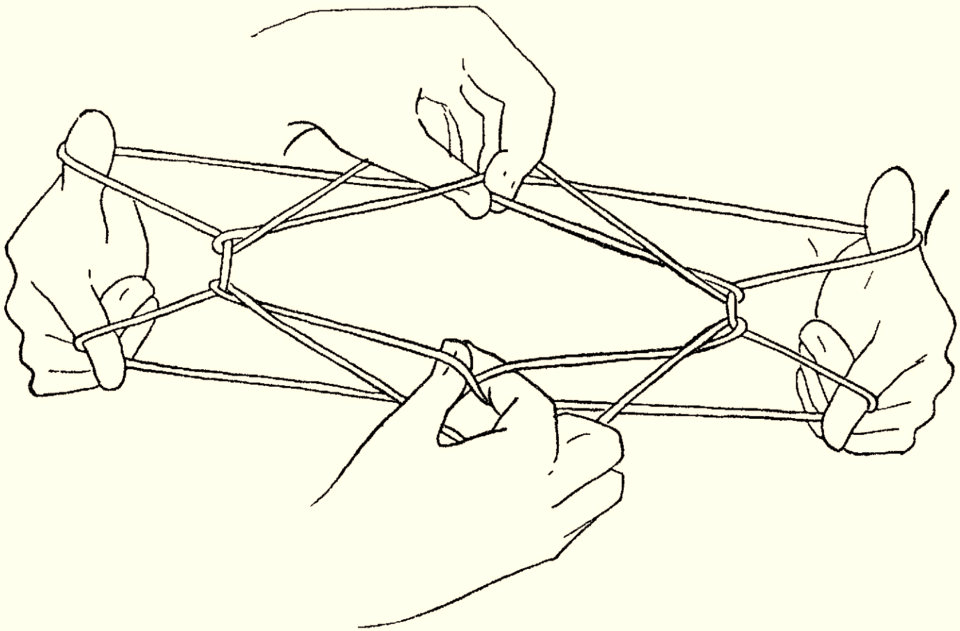
One might reasonably ask what would be unlocked by our adoption of that more expansive ontology. One answer to that would be what Haraway calls “response-ability”, an obvious and very intentional play on “responsibility” and a term which is defined mostly by implication rather than directly (which is another classic Haraway move; you’re meant to work for it, and think it through yourself). The obvious meaning is completely valid, even as it gets complicated by examples and explorations. Response-ability is the capacity to respond, in recognition of the connections of kinship revealed by the Harawayian method of research and/or thinking already explained (which in this book alone goes under a generous handful of different metaphorical synonyms, which all share the same initials, “SF”: science fiction, string figures, speculative feminism, and more). The ability to respond to the creatures and systems with which you are in a relation of kinship must start—but should not end—with your seeing and affirming that kinship, with you acknowledging your place (and theirs!) in the web of mutual dependency which is existence.
As the examples explored above make clear, these dependencies are complex, and all too often ugly and disturbing to our sense of ourselves as good people. But the point is not shame or even guilt so much as the recognition of ubiquitous complicity, in a tangled world where no one’s hands are clean and everything is always changing. In her own words:
“There is no innocence in these kin stories, and the accountabilities are extensive and permanently unfinished. Indeed, responsibility in and for the worldings in play in these stories requires the cultivation of viral response-abilities, carrying meanings and materials across kinds in order to infect processes and practices that might yet ignite epidemics of multispecies recuperation and maybe even flourishing on terra in ordinary times and places. Call that utopia; call that inhabiting the despised places; call that touch; call that the rapidly mutating virus of hope, or the less rapidly changing commitment to staying with the trouble.”
The titular phrase with which that passage ends has, like so many of Haraway’s concepts and phrases, multiple meanings. But one in particular is, in my opinion, particularly relevant to those of us whose work is concerned with change, and particularly with change for the better: to stay with the trouble is to refuse the promise of the solution, which (whether knowingly of not) is a technoscientific trick of language which offers not to open up the web of connection, but rather to seal it up in a neat black box, never to be opened (at least until the subpoenas start arriving, by which time the shares should have been safely cashed out).

DES was a solution; Premarin is a solution; fossil fuels are, at least for some, still a solution; for others (or perhaps for just that same “some”), nuclear fusion or “green hydrogen” or space-based solar or whatever other proprietary and provocatively-priced fantasy gadget you care to name is the solution. The one single problem that all these and many more solutions all seek to solve is the impinging awareness of our connectedness to the world, which must eventually force us to confront the ruinous way in which we have despoiled it, and in so doing despoiled ourselves. What is always for sale, and what is still selling strongly, is our not having to think about where things came from, and our not having to know where they go after we’re done with them.
To use a phrase of my own, albeit one that I like to think Haraway might approve of: we cannot “innovate” our way out of the accumulated and compounded consequences of decades, if not centuries, of “innovation”. To stay with the trouble, then, is to recognise that there can be no escape from the web of dependence, no transcendent escape of Man from the world—indeed, to recognise that every so-called solution merely entangles us further, while trying to convince us it’s setting us free.
If there is a way out, then the way out is through: by coming to terms with our entanglements, and learning to trace them, we might slowly come to learn how to make them less exploitative, and our more-than-human flourishings more mutual.
There is so much more to this book, from which I have here pulled out only a few of the most prominent ideas and concepts, whose detachment from their own subtle interdependencies is, for me at least, keenly felt. I realise with hindsight that I chose an immensely challenging first title for this Deep Reads series—challenging for you, my reader, but also for me as interlocutor! The richness and density of Haraway’s work, as already discussed, keeps it from being more widely understood; an attempt at translation, such as this one, must sacrifice fidelity on the altar of access, and trust that there is value in the attempt. I have done my best to do justice to it.
Later in this first semester of Deep Reads (and, I hope, in further semesters to come) we will be looking at other writers and thinkers whose work walks the more-than-human web—and whose way of walking may prove rather easier for mere mortals to follow! (We’ll be reading Anna Tsing, for instance, who will explore very similar ideas through a far more approachable form of storytelling.)
But I hope that in the meantime you might feel encouraged to try reading some Haraway “in the raw”, so to speak—not despite her difficulty, but rather because of it. One aspect of her argument is that appeals to simplicity, even when well intentioned, are toxic in the long term. To take the time to read challenging texts that don’t give up their ideas easily is to do a service to yourself, and to the world.
If you enjoyed this essay, please tell me what thoughts it prompted by leaving a comment below (or by replying to the email, if you got it that way). If you'd rather not respond to me directly, I'd greatly appreciate you forwarding it to a friend (or posting it on social media, if that's a thing you still do).


.png?ref=worldbuilding.agency)
Comments ()