

week 15 / 2026: cynicism and credulity
As the months pass, the surprise is no longer that hype and outright fiction are made to pass for truth, but rather that everyone seemingly already knows, and has made some sort of peace with it—whether resigned or enthusiastic. But how much longer can cynicism and credulity prevail?

“O, wizard, the spells you’vе cast are broken / I can hear its cry, thе creature has awoken...”
 Fpessoa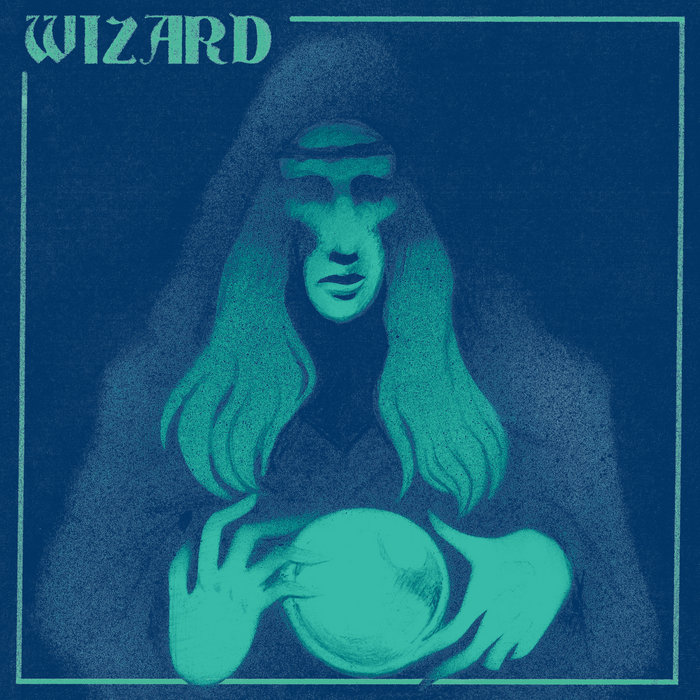
Greetings from Malmö, where the sky is grey and my brain is foggy, because when you burn the candle at both ends you end up getting wax on your jeans. Welcome back to WEEKNOTES at Worldbuilding Agency, where we’re going to think a little bit about hype, accountability and performance, in the theatrical sense of that term.
Step inside, take a seat, and please don’t throw your popcorn at the actors...
among the pixels
We’ll start this week with this depressing but—for me, at least—totally unsurprising essay about astroturfing in the music business.
Astroturfing is a term that describes the fabrication of what appears to be grassroots support, and it’s not a new phenomenon. Indeed, it long predates the coining of the neologism, let alone the internet—though the internet, like all new systems of media, has accelerated and amplified the possibilities of discursive distortion.
The music biz has been at it for a long time, too, which is why Eliza McLamb’s look at the work of the aptly-named* “user-generated content” agency Chaotic Good came as little surprise to me—despite their roster including artists who, on the basis of musical style at least, might once have been categorised as “alternative”:
Alternative music used to mean just that — an alternative to the mainstream — something that couldn’t simply be adopted by everyone else through pure exposure, through virality. There are certainly arguments to be made about the mass appeal of a band like Geese, but no one in good faith could compare them to the commercial pop stars that populate Chaotic Good’s roster.
But the roster runs deep, far past the predictable internet sensations one could expect (and, apologies to the internet sensations, including people I consider to be genuinely great musicians). Geese and Cameron Winter, but also Dijon and Mk.gee. Laufey and Wet Leg. Oklou and Jane Remover.
As McLamb admits, the real line of categorisation now lies between “musicians whose record label can and will shell out money to boost their visibility” and “everyone else”. There’s a potential side-quest here in which we could talk about the flattening of the stylistic landscape of music, but what’s more interesting to me is that the people behind Chaotic Good see themselves as doing the lord’s work: they acknowledge that the system is unfair, and offer their services as a way to have a better chance of winning a rigged game.
I’m not going to second-guess their sincerity on that point. My concern here is the race-to-the-bottom vibe of the whole thing—which is the vibe of pretty much everything these days. It’s zero-sum thinking elevated to a law of physics: everyone is cheating, and that sucks, but there’s not much you can do about it, other than cheat bigger, better and harder.
The really heartbreaking bit for me was less the logic itself, and more McLamb’s resigned acceptance of it:
My utopia knows nothing of “short form content” or “trend simulation” or “narrative campaigns,” but my utopia is a bedtime story I stopped telling myself the first time I got a $30 Spotify payout. This industry is a dirty one, and the cost of success has almost always been paid in dollars and cents — usually by a big label, a management company, or someone’s dad. If a label wanted to contract Chaotic Good on my behalf, I would accept such a deal handily and gratefully. The promise that industry has always made to artists is a tempting, paternal one: you create the magic, and I’ll take care of the rest.
This isn’t to say that swimming against the current is futile, only that I see the kinds of developments made by Chaotic Good as an appropriate weapon in the algorithmic war of attrition.
It can be hard for people my age to understand what seems to be a pervasive defeatism and surrender to the algorithm among younger folk, but McLamb’s position becomes far easier to understand if you read another essay of hers from a few years back, about her time working behind the scenes at one of the big, uh, “adult content social networks”.
A whole generation of has grown up in an economy where employment is synonymous with exploitation and fakery, and everyone wears multiple masks just to get by. If anything, the surprise is that they’re not more cynical than they are.
(* As for Chaotic Good, there’s a very old joke-cum-truism from the world of roleplaying games that, with very few exceptions, CG is the alignment that almost everyone would choose for themselves in the real world, because it means “basically nice, but also fun”. I’ve always felt that the alignment system is misunderstood by most players, because only the first half of a character’s alignment is a matter of conscious choice by the character; the second half is better thought of as how they would be judged by other inhabitants of their world.)
Sticking with the theme of hype, here’s a piece from Matt Klein in collaboration with one Sophia Epstein that might be taken as an argument for moving beyond the zero-sum logic revealed by McLamb’s piece above.
(This piece was free-to-air, but now seems to have been paywalled. I’m leaving it in because I think it’s a useful signal nonetheless, and because I took a clipping of it for the archive.)
Klein and Epstein start with a sort of greatest-misses list of predictions from major brands and consultancies in recent years: tech nonsense like Clubhouse, the Metaverse, NFTs, yes—but also bold assertions from big firms in line with what is now fashionably dismissed as “DEI”.
The hype cycle is not news, of course. But what’s interesting here is Klein and Epstein pointing the finger from their position somewhat inside that tent... and pointing at something that looks remarkably similar to the thing McLamb was pointing at:
Hype compounds when many orgs farm their own “evidence.” Plant a trend name, seed it through press connections, then point to the growing mentions of it as proof of accuracy. But this is information laundering – astroturfing. It’s anything but a “prediction.” (No, you were not ahead of the “pickle girl summer aesthetic” trend. You just forced it upon people and are now measuring a reaction, not natural interest or favorability.)
The real take-away line comes quite close to the top of the piece, though: “Predicting the future, or pledging to change it, has become a form of marketing in itself, or more precisely a performance.”
In what may seem at first a paradox, Klein and Epstein go on to suggest that the shamelessness of the age is a function of “systems and cultures” that punish the honesty required for accountability to flourish. They offer no “solution” to this problem, though they do suggest that businesses and other organisations in the business of making predictive claims could build accountability into the process, e.g. by surfacing methodology, identifying risks, and returning to earlier predictions to assess where they went wrong.
In other words, those businesses and organisations could do something much more like the better sort of foresight work. I’m painfully aware that this is something of a No True Scotsman argument, but: a good foresight process should always disavow prediction, foreground uncertainty, and rely on rigorous and tested processes and frameworks. Foresight done properly is all about acknowledging and preparing for the inevitable discontinuity of current trends, and not about promising jetpacks for all.
But promising jetpacks for all is what opens venture-capitalist wallets, what lands you the big keynotes and consulting gigs. It is common to characterise this as a deeply cynical age—indeed, I’m guilty of doing so quite frequently—but at the lofty levels where decisions of consequence are made, credulity seems far more common than cynicism.
But I find myself thinking back to McLamb, and others like her. At some point, a generation raised inside a casino is going to wonder what life might be like outside of it… and I suspect, or perhaps just hope, that point might not be far away.
By way of third data-point, I’ll just mention in passing this deeply scathing LRB review of the recently-published memoir of Christopher Steele, the British spy turned private investigator who produced the dossier that pegged Trump as a Kremlin asset.
Like all LRB pieces, it’s a loooong read, and worth the time just for the insights into how the “business intelligence” business actually works. (Spoilers: the “insights” reported are heavily distorted in the favour of what the commissioning client wants to hear, to a degree that makes even McKinsey look like a paragon of research ethics.) But also of interest are the asides about Steele himself, who plays up to the Bond-movie expectations that people have of an intelligence operative with not just a nod and a wink, but with an open admission that all the world’s a stage:
Steele continues to keep himself in the news, most recently through his unsupported claim in February that Jeffrey Epstein was a Russian spy. Despite the financial and staffing difficulties facing Orbis and his other consulting company, Walsingham Partners, he has maintained a buoyant public face. After all, ‘you have to have style over substance to succeed,’ he told the Cambridge Union. ‘How you present yourself is now more important than what you know.’ It’s a philosophy that has served him well to date.
Perhaps my assumed dichotomy is false; perhaps cynicism and credulity are in fact two sides of the same coin.
between the pages
I’m still on a break from The Magic Mountain, and sticking with the shorter forms of fiction as a respite from a hectic workload. This week I’ve been reading Numbers in the Dark, a collection of juvenilia, fragments and pendants from the insanely prolific career of Italo Calvino.
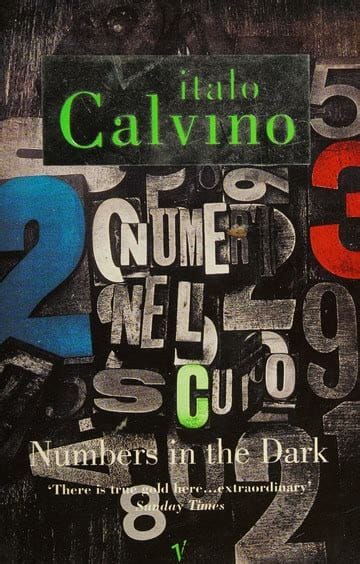
The early stuff in particular is less interesting for its quality as fiction and more for its insight into the formative thoughts and practice of an eventual master. Calvino’s youthful works were, quite consciously, written as fables, because this was the only safe way to talk about the contradictions and absurdities of Italy in the troubled aftermath of the second world war—absurdities which, of course, were not unique to that country, though perhaps as unique in their particular expression there as they were anywhere else.
But it is through particularity that the art of fiction allows us to access universal truths of the human condition—and it’s fascinating watching the young Calvino working to access the abstract through the concrete, a move which would define his more mature work.
It’s also interesting to see him applying a very science-fictional technique to more mundane topics. “Beheading the Heads” is a thought-experiment presented as fiction, in which Calvino tries to think through the outcome of revolutionary movement that takes as a founding principle the inevitable and quite literal beheading of its leadership on a regular basis. I don’t think the story or its world are meant to be taken as prediction, or even necessarily as a reasoned argument—indeed, the absurdity of the premise, which I take to be a commentary on the absurdities of revolutionary politics as actually practiced (and with which Calvino was all too familiar), seems almost certain to result in an absurd end-state, if one decides to assume it succeeds.
But that process of thinking it through, working it out—of really committing to the “what if?” which is the heart of all good speculative writing, and chasing it all the way down—is both familiar to me, and at the same time also here shown to me afresh. Perhaps to treat the absurd with the greatest seriousness is one way to deal with a world in which cynicism and credulity walk hand in hand?
lookback
Another busy week—though I actually managed to get ahead of my expectations somewhat, with a couple of projects more advanced than I thought they would be at this point. This is very welcome, because running at full tilt without sufficient rest is starting to take its toll on my physical well-being. The warning signs are familiar by this point—though it’s not always possible to pull over and rest quite as soon as you should. And so, to extend the metaphor, I’m gonna have to keep driving for a while after these weeknotes are done, but slowly, and for a limited distance.
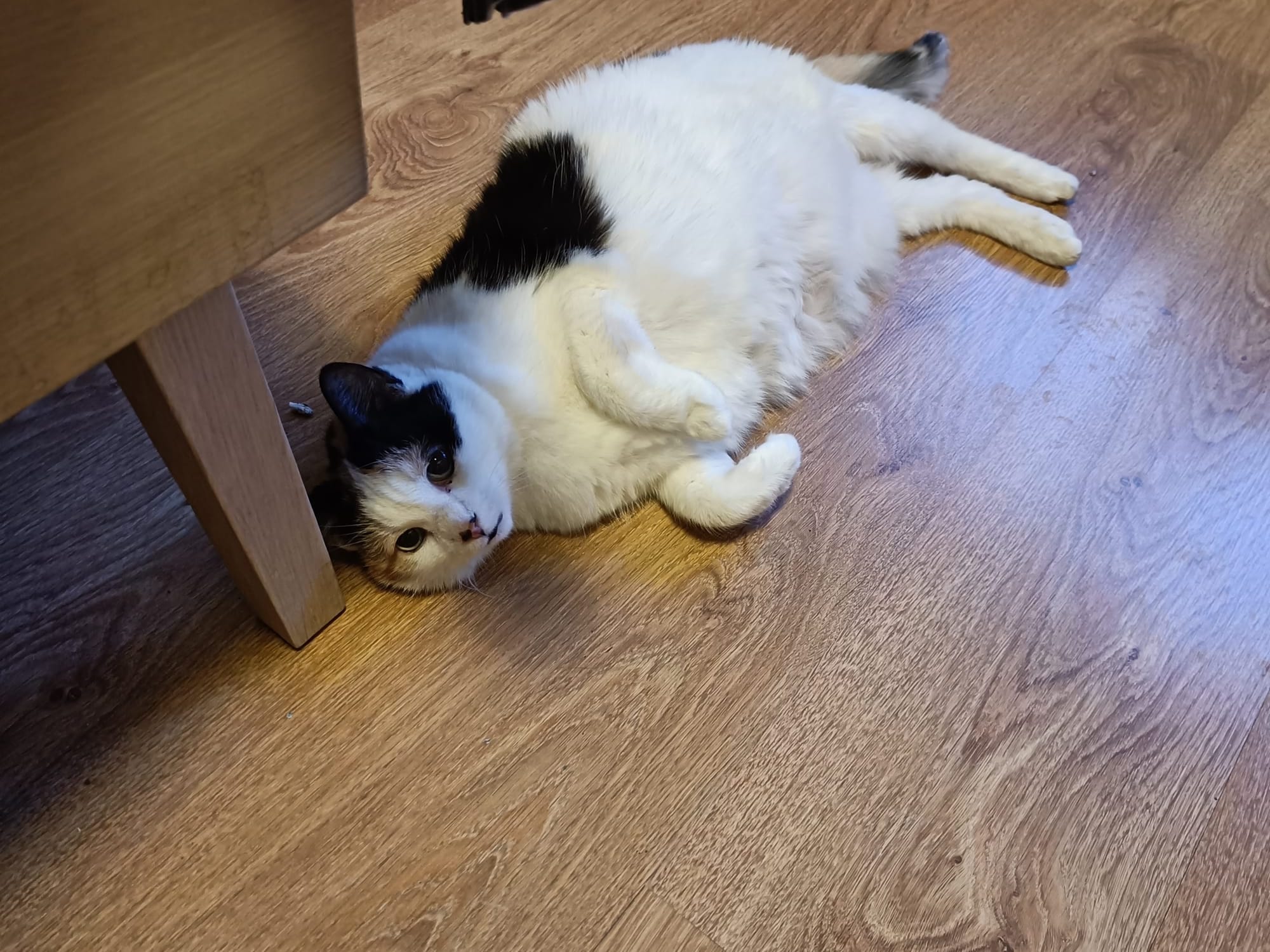
Two big slabs of work on MUNICIPAL and CHAPERONE, some kick-off bits for new-to-the-slate LUDIC, some bid-writing and some talk-writing and a bunch of admyn… and a few hours tagged as art practice. I will note that those latter hours were mostly spent tidying the studio and sorting somewhat listlessly through collage materials, rather than actually trying to make anything! But art has its infrastructural requirements, too—and even an hour sifting through a big box of collected papers is surprisingly effective at hosing my mind clean after a hectic day of more focussed, rational work. Simply having something else to turn to is very valuable… though it does mean that my cat is one hour hungrier and crabbier when I finally get home to feed her.
ticked off
- Twelve hours on PROJECT MUNICIPAL. (A full deck of drivers, described and referenced and illustrated, and delivered on time to the client.)
- Ten hours on PROJECT CHAPERONE. (Five and a half thousand words written for a draft of a book chapter. This is where I managed to get ahead of expectations, though I had consciously lowballed those expectations, as I have found to be wise when it comes to writing in particular. But sometimes, when you know the material and you have a structure ready to go, you really can just blaze it out… though there is always a price to pay for running the engine hot.)
- Nine hours of admyn, plus two hours of bid-writing and submitting.
- Four hours of art practice (see above).
- Three hours on PROJECT LUDIC. (I think it’s fine to declare from the outset that this is the next collaborative foresight cycle with my god friends at Media Evolution.)
- Two hours of reading for research.
- Two hours of work on this here website, pasting up and publishing my interview with Scott and Susan of Changeist earlier in the week, plus three hours on these here weeknotes.
- One hour of combination networking and bizdev, which looks like it may result in a new project joining the slate fairly soon.
- Ten hours of undirected writing and reading, as always.
Sheesh—no wonder I’m cream-crackered! Nonetheless: the road goes ever on and on, as the man once wrote…
… which means it’s time to get some lunch, and then get back to my talk outline. I hope all is well with you, wherever you may be.
This has been the Worldbuilding Agency weeknotes for Week 15 of 2026. Thanks for reading! If you've enjoyed them, it's free to subscribe. If you are already subscribed, please send to a friend!



Comments ()